Buy thinksite.eu ?
We are moving the project
thinksite.eu .
Are you interested in purchasing the domain
thinksite.eu ?
domain@kv-gmbh.de · 0541-91531010
Buy thinksite.eu ?
What is the angle at the cutting edge?
The angle at the cutting edge is the angle formed between the cutting edge of a tool and the workpiece being cut. This angle is crucial in determining the efficiency and effectiveness of the cutting process. A smaller angle at the cutting edge results in a sharper tool, allowing for more precise cuts, while a larger angle may provide more strength and durability to the cutting edge. The optimal angle at the cutting edge depends on the material being cut and the specific cutting operation being performed. **
How do you calculate the angle of the cutting edge of the tool?
To calculate the angle of the cutting edge of a tool, you can use a protractor or a specialized tool angle gauge. Place the tool on a flat surface and align the gauge with the cutting edge. Then, measure the angle formed between the cutting edge and the surface. This angle is the cutting edge angle of the tool. It is important to ensure that the tool is properly secured and aligned to get an accurate measurement. **


Similar search terms for Angle
Top-Angebote
Products related to Angle:
-
Black & Decker BEG010A5-GB 710 W 115 mm Small Angle Grinder & 5 Cutting Discs - Orange & BlackThis powerful Black + Decker 710 W angle grinder tackles tough jobs with ease. It can cut through metal pipes, stone slabs and ceramic tiles. Rust and paint removal? It makes light work of those too. With a slim and compact design , it lets you reach tight, awkward spaces around the home. The soft start motor provides extra control by reducing movement on start-up. And with a lock-on switch and two handle positions , you'll feel confident and in command during any cutting or grinding project. Go43,99 £*Shipping: 0,00 £Secure redirect to the provider
-
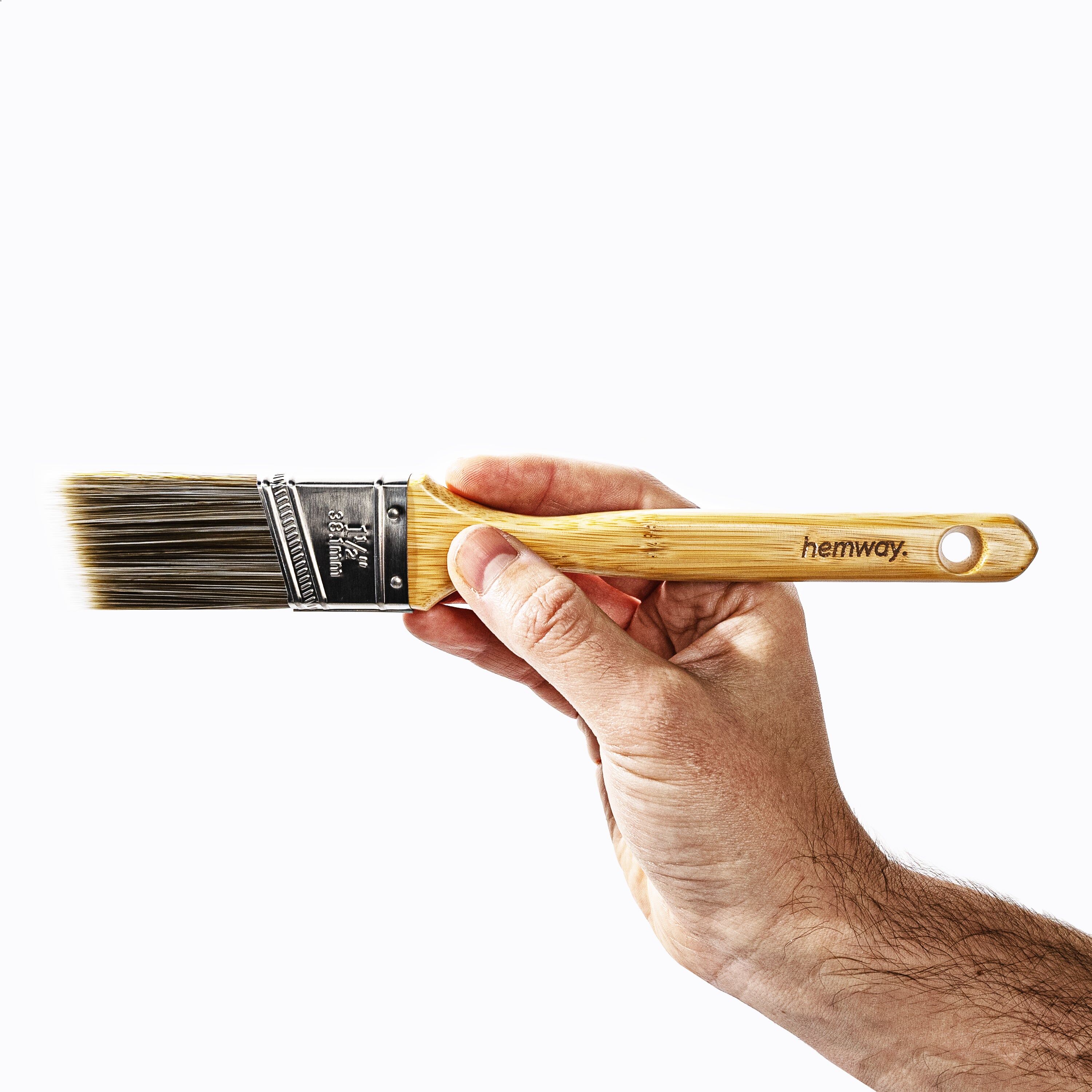
Hemway Premium 1.5 Inch Bamboo Cutting-In Angle Sash Paint Brush For Indoor Outdoor Emulsion Paint & Varnish - 1.5 InchAchieve professional, flawless results with Hemway's Premium 1.5" Bamboo Cutting-In Angle Sash Paint Brush. This single 1.5" Cutting-In brush is crafted with an eco-friendly, durable bamboo handle that provides a comfortable, non-slip grip for precision and control. Designed to ensure zero bristle loss, it delivers an ultra-smooth finish, making it ideal for detailed painting projects and tight spaces. Perfect for home décor, furniture upcycling, and DIY renovations, Hemway's 1.5" bamboo angle paint brush offers a high-quality, sustainable choice for a lasting, beautiful finish on your intricate projects. Description Hemway's 1.5" Premium Bamboo Cutting-In Angle Sash Paint Brush is compatible with all types of paints, lacquers, and stains, making it the perfect choice for both interior and exterior detail work. Ideal for edging, intricate designs, and precision applications, this brush provides sharp lines and clean finishes without streaks or gaps. Built for durability and smooth application, this eco-friendly bamboo paint brush is ideal for homeowners, DIYers, and professionals seeking reliable, high-quality results on any project. Features Perfect for DIY enthusiasts and professional painters alike, Hemway’s 1.5" Premium Bamboo Paint Brush is an essential addition to any toolkit. This single brush is crafted with an eco-friendly bamboo handle and top-tier, no-shed bristles, offering lasting durability and exceptional performance across a range of detailed applications. Whether tackling corners, edges, or intricate designs, this premium brush provides smooth, precise results every time. Elevate your painting experience with a high-quality tool designed for both small and complex projects. How to use For detailed work, use the 1.5" brush for corners, edges, or intricate designs. Its smaller size allows for accuracy in tight spaces, minimizing drips and ensuring clean lines. Dip only a third of the bristles into paint, then apply in smooth, controlled strokes, keeping the brush angled slightly. Clean the brush thoroughly between uses to maintain bristle quality, ensuring lasting, smooth performance. Recyclable Sustainable Packaging for Eco-Friendly Crafting We are committed to sustainability, and our packaging reflects this. Our materials are fully recyclable or made from recycled materials, including: * Delivery Boxes * Labels * Pulp Fittings We focus on lowering our environmental impact with sustainable packaging choices. By choosing our brushes, you support environmentally responsible crafting practices, which helps reduce your ecological footprint. Additional Information The Hemway Premium 1.5" Bamboo Paint Brush is an essential tool for both DIY enthusiasts and professional painters. Featuring an eco-friendly bamboo handle, this brush offers a comfortable, non-slip grip, ensuring precise8,95 £*Shipping: 0,00 £Secure redirect to the provider
-
StarTech SATA Cable Left Angle RedMake a left-angled connection to your SATA drive, for installation in tight spaces. The SATA12LA1 Left Angle (90-degree) SATA Cable features a standard (straight) SATA receptacle as well as a left-angled SATA receptacle, providing a simple 12-inch connection to a Serial ATA drive, with full SATA 3.0 bandwidth support of up to 6Gbps when used with SATA 3.0 compliant drives. The left-angled SATA connection enables you to plug in your Serial ATA hard drive in hard to reach areas or tight spaces, wh12,99 £*Shipping: 0,00 £Secure redirect to the provider



-
What is the maximum cutting angle?
The maximum cutting angle refers to the maximum angle at which a cutting tool or blade can be positioned in relation to the workpiece while still effectively cutting. This angle is determined by the design and capabilities of the cutting tool or machine. For example, in woodworking, the maximum cutting angle for a table saw blade may be around 45 degrees, while for a bandsaw blade it may be closer to 90 degrees. It is important to adhere to the maximum cutting angle to ensure safe and efficient cutting operations. **
-
What is the cutting angle problem 2?
The cutting angle problem 2 involves determining the angle at which a tool or blade should be positioned in order to make a precise and clean cut. This problem is often encountered in various industries such as woodworking, metalworking, and machining. The correct cutting angle is crucial for achieving the desired outcome and avoiding issues like material damage, tool wear, or inaccuracies in the cut. Engineers and technicians use mathematical calculations, experimentation, and specialized tools to solve the cutting angle problem 2 and optimize cutting processes. **
-
How can the cutting angle be determined?
The cutting angle can be determined by considering the type of material being cut and the desired outcome. For softer materials, a larger cutting angle may be more appropriate to reduce cutting forces and minimize tool wear. On the other hand, harder materials may require a smaller cutting angle to increase tool strength and cutting efficiency. Additionally, the specific cutting tool being used and its design will also influence the cutting angle selection. It is important to consider these factors and consult cutting tool manufacturers' recommendations to determine the most suitable cutting angle for a given application. **
-
How do I calculate this cutting angle?
To calculate the cutting angle, you can use the formula: cutting angle = arctan (tool diameter / workpiece diameter). First, measure the diameter of the tool you are using and the diameter of the workpiece. Then, divide the tool diameter by the workpiece diameter and take the arctan of the result to find the cutting angle. This angle will help you determine the proper orientation of the tool for cutting the workpiece. **


How can the cutting angle be calculated?
The cutting angle can be calculated using trigonometric functions. The cutting angle is the angle between the cutting edge of the tool and the workpiece surface. To calculate the cutting angle, you can use the tangent function, which is the ratio of the opposite side to the adjacent side in a right-angled triangle. By knowing the dimensions of the cutting tool and the workpiece, you can use trigonometry to calculate the cutting angle. This angle is important in determining the efficiency and effectiveness of the cutting process. **
What does the angle at the edge theorem state?
The angle at the edge theorem states that the exterior angle of a triangle is equal to the sum of the two opposite interior angles. In other words, if you extend one side of a triangle, the angle formed by the extension is equal to the sum of the two opposite interior angles. This theorem is a fundamental concept in geometry and is used to solve various problems involving triangles and their angles. **
Top-Angebote
Products related to Angle:
-
Fusion Finds Portable Hair Cutting Folding Mirror With Multi Angle Rear View For Self Haircuts & Makeup Portable Hair Cutting Folding Mirror With Multi Angle Rear View For Self Haircuts & MakeupEnjoy salonquality grooming without leaving home. This hair cutting mirror gives you a clear view of the back and sides of your head, making selfhaircuts, beard trimming, and styling easier than ever. Its clever foursided folding mirror design...32,97 $*Shipping: 0,00 $Secure redirect to the provider
-
StayWell Innovative Anti Fungal Laser Pen With Cutting Edge Fungal Infections Removal And Safe for Skin Technology Innovative Anti Fungal Laser Pen With Cutting Edge Fungal Infections Removal And Safe for Skin TechnologyDo you avoid going barefoot or wearing sandals because of your unsightly nails If so, our AntiFungal Laser Pen is the solution you've been looking for. Our laser pen combines the power of the infrared pulsed laser and blue light to exterminate...20,97 $*Shipping: 0,00 $Secure redirect to the provider
-
Black & Decker BEG010A5-GB 710 W 115 mm Small Angle Grinder & 5 Cutting Discs - Orange & BlackThis powerful Black + Decker 710 W angle grinder tackles tough jobs with ease. It can cut through metal pipes, stone slabs and ceramic tiles. Rust and paint removal? It makes light work of those too. With a slim and compact design , it lets you reach tight, awkward spaces around the home. The soft start motor provides extra control by reducing movement on start-up. And with a lock-on switch and two handle positions , you'll feel confident and in command during any cutting or grinding project. Go43,99 £*Shipping: 0,00 £Secure redirect to the provider
-
Hemway Premium 1.5 Inch Bamboo Cutting-In Angle Sash Paint Brush For Indoor Outdoor Emulsion Paint & Varnish - 1.5 InchAchieve professional, flawless results with Hemway's Premium 1.5" Bamboo Cutting-In Angle Sash Paint Brush. This single 1.5" Cutting-In brush is crafted with an eco-friendly, durable bamboo handle that provides a comfortable, non-slip grip for precision and control. Designed to ensure zero bristle loss, it delivers an ultra-smooth finish, making it ideal for detailed painting projects and tight spaces. Perfect for home décor, furniture upcycling, and DIY renovations, Hemway's 1.5" bamboo angle paint brush offers a high-quality, sustainable choice for a lasting, beautiful finish on your intricate projects. Description Hemway's 1.5" Premium Bamboo Cutting-In Angle Sash Paint Brush is compatible with all types of paints, lacquers, and stains, making it the perfect choice for both interior and exterior detail work. Ideal for edging, intricate designs, and precision applications, this brush provides sharp lines and clean finishes without streaks or gaps. Built for durability and smooth application, this eco-friendly bamboo paint brush is ideal for homeowners, DIYers, and professionals seeking reliable, high-quality results on any project. Features Perfect for DIY enthusiasts and professional painters alike, Hemway’s 1.5" Premium Bamboo Paint Brush is an essential addition to any toolkit. This single brush is crafted with an eco-friendly bamboo handle and top-tier, no-shed bristles, offering lasting durability and exceptional performance across a range of detailed applications. Whether tackling corners, edges, or intricate designs, this premium brush provides smooth, precise results every time. Elevate your painting experience with a high-quality tool designed for both small and complex projects. How to use For detailed work, use the 1.5" brush for corners, edges, or intricate designs. Its smaller size allows for accuracy in tight spaces, minimizing drips and ensuring clean lines. Dip only a third of the bristles into paint, then apply in smooth, controlled strokes, keeping the brush angled slightly. Clean the brush thoroughly between uses to maintain bristle quality, ensuring lasting, smooth performance. Recyclable Sustainable Packaging for Eco-Friendly Crafting We are committed to sustainability, and our packaging reflects this. Our materials are fully recyclable or made from recycled materials, including: * Delivery Boxes * Labels * Pulp Fittings We focus on lowering our environmental impact with sustainable packaging choices. By choosing our brushes, you support environmentally responsible crafting practices, which helps reduce your ecological footprint. Additional Information The Hemway Premium 1.5" Bamboo Paint Brush is an essential tool for both DIY enthusiasts and professional painters. Featuring an eco-friendly bamboo handle, this brush offers a comfortable, non-slip grip, ensuring precise8,95 £*Shipping: 0,00 £Secure redirect to the provider
-
What is the angle at the cutting edge?
The angle at the cutting edge is the angle formed between the cutting edge of a tool and the workpiece being cut. This angle is crucial in determining the efficiency and effectiveness of the cutting process. A smaller angle at the cutting edge results in a sharper tool, allowing for more precise cuts, while a larger angle may provide more strength and durability to the cutting edge. The optimal angle at the cutting edge depends on the material being cut and the specific cutting operation being performed. **
-
How do you calculate the angle of the cutting edge of the tool?
To calculate the angle of the cutting edge of a tool, you can use a protractor or a specialized tool angle gauge. Place the tool on a flat surface and align the gauge with the cutting edge. Then, measure the angle formed between the cutting edge and the surface. This angle is the cutting edge angle of the tool. It is important to ensure that the tool is properly secured and aligned to get an accurate measurement. **
-
What is the maximum cutting angle?
The maximum cutting angle refers to the maximum angle at which a cutting tool or blade can be positioned in relation to the workpiece while still effectively cutting. This angle is determined by the design and capabilities of the cutting tool or machine. For example, in woodworking, the maximum cutting angle for a table saw blade may be around 45 degrees, while for a bandsaw blade it may be closer to 90 degrees. It is important to adhere to the maximum cutting angle to ensure safe and efficient cutting operations. **
-
What is the cutting angle problem 2?
The cutting angle problem 2 involves determining the angle at which a tool or blade should be positioned in order to make a precise and clean cut. This problem is often encountered in various industries such as woodworking, metalworking, and machining. The correct cutting angle is crucial for achieving the desired outcome and avoiding issues like material damage, tool wear, or inaccuracies in the cut. Engineers and technicians use mathematical calculations, experimentation, and specialized tools to solve the cutting angle problem 2 and optimize cutting processes. **
Similar search terms for Angle
-
StarTech SATA Cable Left Angle RedMake a left-angled connection to your SATA drive, for installation in tight spaces. The SATA12LA1 Left Angle (90-degree) SATA Cable features a standard (straight) SATA receptacle as well as a left-angled SATA receptacle, providing a simple 12-inch connection to a Serial ATA drive, with full SATA 3.0 bandwidth support of up to 6Gbps when used with SATA 3.0 compliant drives. The left-angled SATA connection enables you to plug in your Serial ATA hard drive in hard to reach areas or tight spaces, wh12,99 £*Shipping: 0,00 £Secure redirect to the provider
-
Wolf Garten Multi-Change Angle BroomThe Wolf Garten Multi-Change Angle Broom is ideal for getting to hard to reach areas and confined spaces with its angled design. Great for removing cobwebs, dust and debris from corners that a standard broom is unable to reach. Designed to be used with your choice of handle (sold separately) with a simple push of the button and a gentle click. Made in Germany and complete with a 35 year manufacturers guarantee. Dimensions: 35(H) x 25(W) x 7(L)cm.23,39 £*Shipping: 3,50 £Secure redirect to the provider
-
Draper 83953 100mm Air Angle GrinderDescription Grind and shape materials with precision using the Draper 83953 Air Angle Grinder. This tool is designed for tradespeople and DIY enthusiasts seeking a reliable and efficient grinding solution. The angle grinder features a safety trigger that helps prevent accidental starts, ensuring safe operation during use. Its lightweight aluminium housing is ergonomically designed, making it comfortable to handle even during extended periods of use. Equipped with hardened steel bevelled gears, this air angle grinder also includes a built-in regulator, governor mechanism, and top exhaust for optimal performance. The included 1/4" BSP airline connector makes it easy to connect to your air supply. An essential addition for anyone looking to tackle grinding tasks with ease and safety.66,49 £*Shipping: 0,00 £Secure redirect to the provider
-
How can the cutting angle be determined?
The cutting angle can be determined by considering the type of material being cut and the desired outcome. For softer materials, a larger cutting angle may be more appropriate to reduce cutting forces and minimize tool wear. On the other hand, harder materials may require a smaller cutting angle to increase tool strength and cutting efficiency. Additionally, the specific cutting tool being used and its design will also influence the cutting angle selection. It is important to consider these factors and consult cutting tool manufacturers' recommendations to determine the most suitable cutting angle for a given application. **
-
How do I calculate this cutting angle?
To calculate the cutting angle, you can use the formula: cutting angle = arctan (tool diameter / workpiece diameter). First, measure the diameter of the tool you are using and the diameter of the workpiece. Then, divide the tool diameter by the workpiece diameter and take the arctan of the result to find the cutting angle. This angle will help you determine the proper orientation of the tool for cutting the workpiece. **
-
How can the cutting angle be calculated?
The cutting angle can be calculated using trigonometric functions. The cutting angle is the angle between the cutting edge of the tool and the workpiece surface. To calculate the cutting angle, you can use the tangent function, which is the ratio of the opposite side to the adjacent side in a right-angled triangle. By knowing the dimensions of the cutting tool and the workpiece, you can use trigonometry to calculate the cutting angle. This angle is important in determining the efficiency and effectiveness of the cutting process. **
-
What does the angle at the edge theorem state?
The angle at the edge theorem states that the exterior angle of a triangle is equal to the sum of the two opposite interior angles. In other words, if you extend one side of a triangle, the angle formed by the extension is equal to the sum of the two opposite interior angles. This theorem is a fundamental concept in geometry and is used to solve various problems involving triangles and their angles. **
* All prices are inclusive of VAT and, if applicable, plus shipping costs. The offer information is based on the details provided by the respective shop and is updated through automated processes. Real-time updates do not occur, so deviations can occur in individual cases. ** Note: Parts of this content were created by AI.